The History of Haddington

The Goat was first adopted as the burgh coat-of-arms

In 1296 the Goat was first adopted as the burgh coat-of-arms probably because the first provost, a skinner or tanner – appropriated the symbol of his guild – the goat – into the burgh seal.

Robert the Bruce gave his seal of approval to Haddington
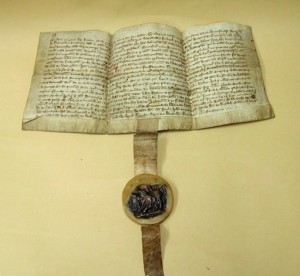
Robert the Bruce Charter

In 1318, Robert the Bruce gave his seal of approval to Haddington by confirming its status as a Royal Burgh.  The Bruce Charter is the oldest document held by East Lothian Council archives. https://www.johngraycentre.org/east-lothian-subjects/society/bruce-charter-translation/#:~:text=Charter%20dated%201318%2C%20confirming%20Haddington’s,men%20of%20his%20land%2C%20Greeting.
Walter Bower (1385 –1449)

Born in Haddington in 1385, Bower became Abbot of Inchcolm Abbey in the Firth of Forth. As a leading cleric to James I, he played an important role in matters of state as well as religion. However, he is primarily remembered for his work as a chronicler and historian. He…Read More

Fourth largest town in Scotland

In the early 15th century Haddington was the fourth largest town in Scotland. 

St Mary’s Kirk
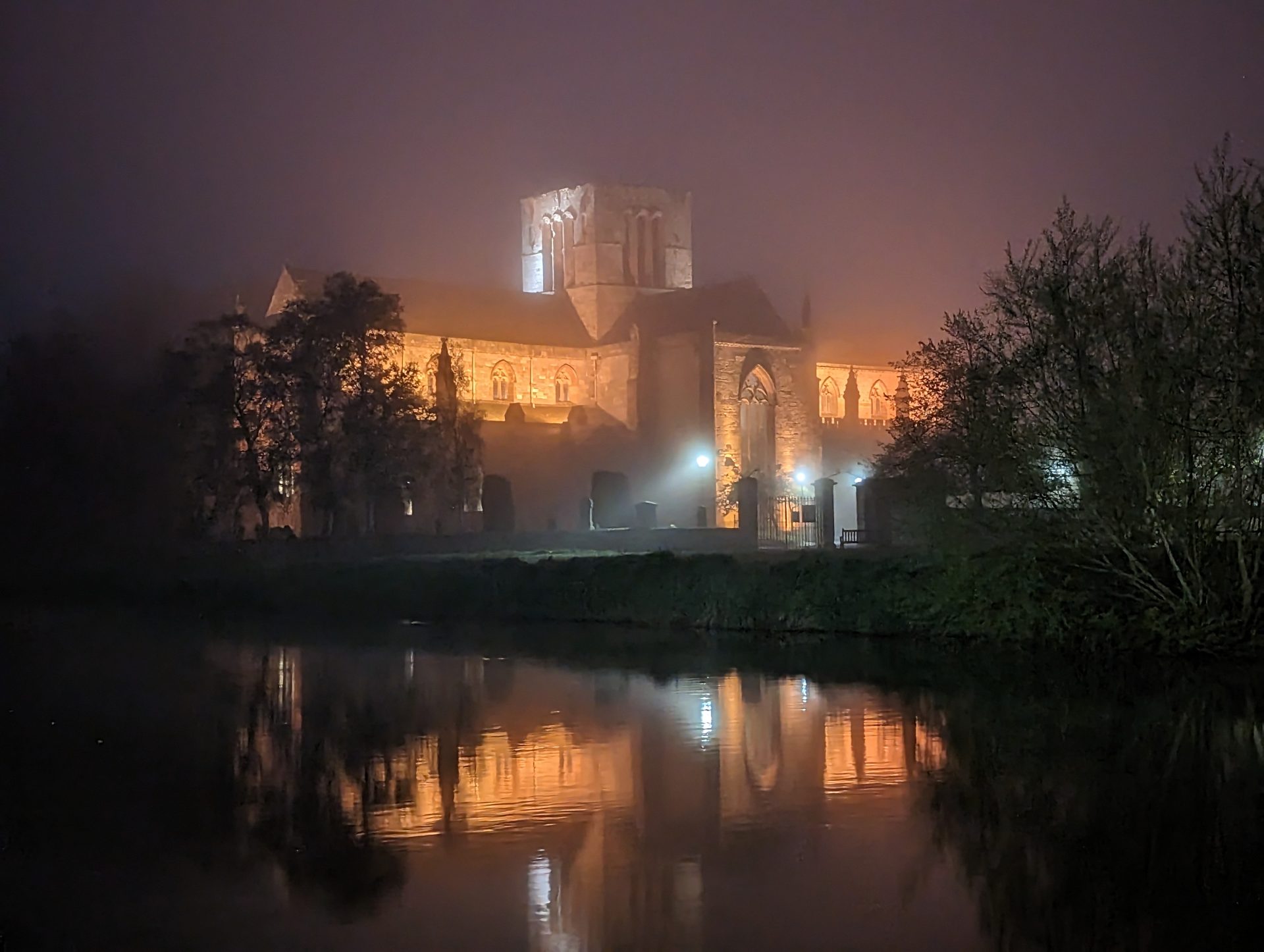
View of St Marys Church taken from across the Tyne at night

St Mary’s Kirk, built in the 14th and 15th centuries, is the largest parish church with the longest nave in Scotland.   It was completed in 1462. Link to Scotland Gazetteer entry for St Mary’s Kirk
John Mair (1467 – 1550)

John Mair, or Major, also known as Haddingtonus Scotus was a highly regarded philosopher, theologian and historian in his day. Born at Gleghornie, near North Berwick, he attended grammar school in Haddington before studying in Paris and Glasgow. As Provost of St Salvator’s College, St Andrews University, his revolutionary ideas…Read More

John Knox born in Haddington (c1514 –1572)
Knox Institute Haddington

John Knox born at Giffordgate, Haddington. A more complete description of John Knox can be found in this link. Amongst the many significant religious figures that have come from East Lothian, John Knox  stands head and shoulders above them all. In a life of barely sixty years he rose from…Read More
Sir William Maitland of Lethington (1525 – 9 June 1573)

The eldest son of the judge and poet Sir Richard Maitland, Sir William was born at Lethington, now Lennoxlove and rose to become Secretary to State to Marie de Guise and Mary Queen of Scots. A man of great wit and learning, he was educated at St Andrews and the…Read More

The Siege of Haddington – the longest siege in Scottish history
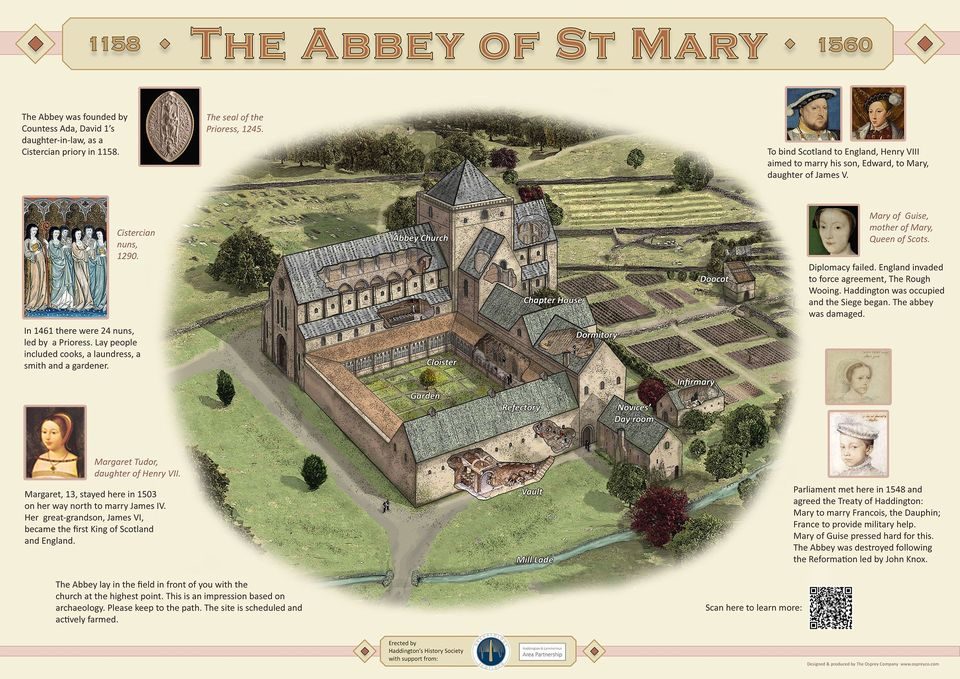
Information panel of Treaty of Haddington

The Siege of Haddington lasted from July 1548 to September 1549, making it the longest siege in Scottish history.  This is a link to the story of Scotlands longest siege
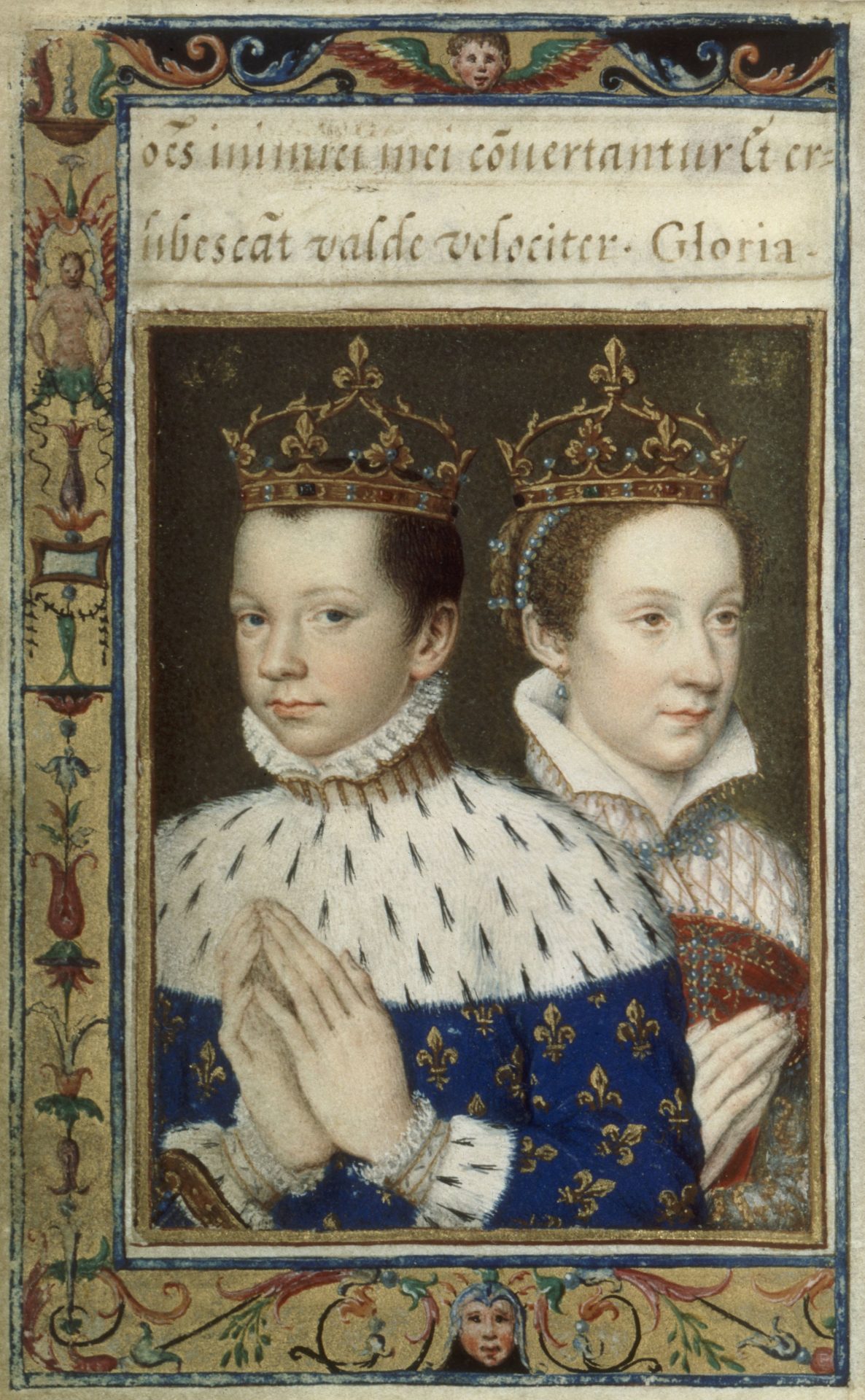
Mary Queen of Scots betrothed to French Dauphin
The king and his spouse Mary Stuart, Queen of Scots (painted around 1558). (Bibliothèque Nationale de France)

The Treaty of Haddington signed at the abbey on 7 July 1548, betrothing Mary, Queen of Scots to the French Dauphin, is one of the most significant treaties in Scottish history. There is a link to a BBC bitesize video giving context to the betrothal when you click here The…Read More

situs slot slot gacor hari ini